
My youngest used to hide under the dining table every time thunder rolled. Not in a fun, fort-building way. Wide eyes, hands over her ears. If you've got a storm-anxious child, you know that feeling of wanting to fix the fear and not quite knowing how.
No single conversation fixed it. What helped was a mix of honest information, a family plan and a house we trusted to keep us safe, and for families in hail country that trust often starts with a local Amarillo roofing company checking the roof after big storms.
Companies like CRS Roofing & Construction offer free inspections with drone photos and a written report. Here's what worked for us, and what I've picked up along the way.
Tell them the truth, at their level
Kids fear what they don't understand. A little science goes a long way.
With toddlers and preschoolers, keep it short and calm: "Thunder is the sound lightning makes. It's loud, but it can't hurt us inside." Early elementary kids can hear that storms happen when warm and cool air meet, and a picture book about weather helps a lot. Older kids can handle the real details, like how hail forms, why tornado warnings exist and what meteorologists are watching on radar, and for many of them that knowledge turns fear into curiosity almost overnight.
The National Weather Service has kid-friendly safety resources that make good conversation starters.
Give everyone a job
Kids feel safer when they have a role. Sit down together and settle four things.
- Where we go. The safest interior room on the lowest floor, away from windows.
- What we bring. A flashlight for each child, a favorite stuffed animal, a charged phone and some snacks.
- Who does what. One child grabs the flashlights, another brings the pet, a grown-up checks the weather radio.
- How we stay calm. A storm playlist, a deck of cards or a book to read together.
Practice once or twice on a calm day. Rehearsal makes the real thing feel familiar.
The house is part of the comfort
I didn't think about this until a storm left a water stain spreading across my son's bedroom ceiling. Kids can tell when the grown-ups are worried about the house. If you tense up about leaks every time it storms, they notice.
Looking after the roof became part of how I made our home feel safe for all of us. After big storms, check for new stains on ceilings (kids' rooms and closets especially), notice any musty smells that could mean hidden moisture, and walk the yard looking for bits of shingle. Before storm season, clean the gutters so water drains away from the house, trim branches hanging over the roof and get an inspection, especially if the house is more than a few years old.
What hail-country families already know
Families in the Texas Panhandle have more practice at this than most. Hail can come anytime from spring through fall, and the wind and sun never really let up. Lots of parents there schedule a check after every significant hailstorm. Not because they see damage. Because hail damage is often invisible from the ground, and catching it early means fewer leaks into the rooms where children sleep.
Roofers in the area also commonly suggest impact-resistant shingles rated UL 2218 Class 4 when a family is replacing a roof. For a parent the appeal is simple. A roof that holds up better means more nights of sound sleep.
When it leaks anyway
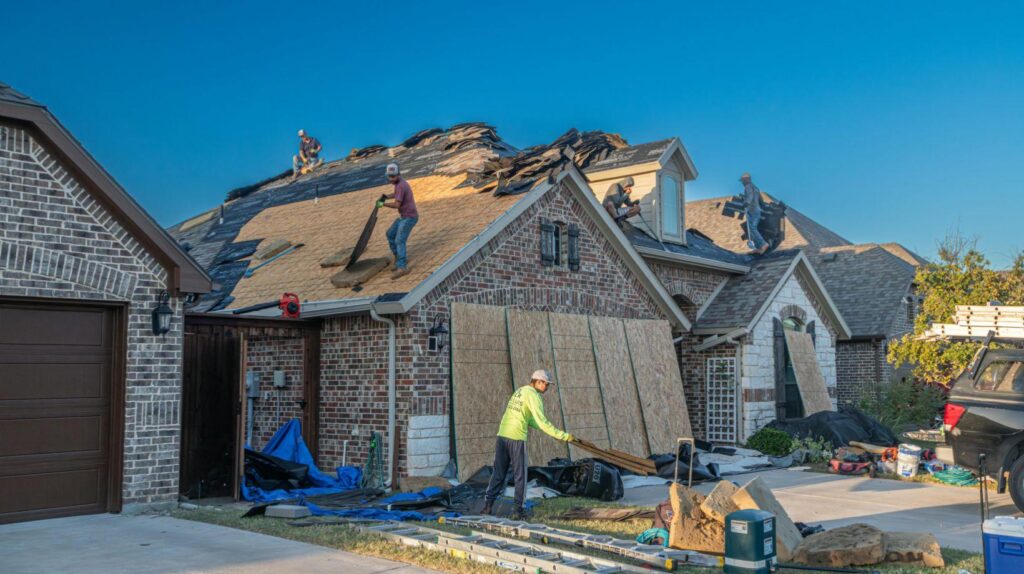
Even with good prep, storms sometimes win. If you find a leak, keep the kids away from the wet area and anything electrical nearby, move belongings, and set out buckets or towels. Take photos for insurance. Then call a roofer about emergency tarping so no more water gets in.
Let the kids help in small ways. Moving toys counts. So does drawing a picture for the roofer. It gives them a bit of control in an unsettling moment, and for older kids an inspection report with drone photos can be oddly reassuring: here's our roof, here's what the storm did, here's how we're fixing it.
Storms got cozy
Over time, storms in our house went from scary to almost cozy. We light candles (safely), play board games in the hallway and watch the lightning from a safe distance. My daughter now narrates the weather like a tiny meteorologist.
We never got rid of the fear completely. We built trust instead, in the plan, in each other and in the house over our heads. When kids know there's a plan and the home is cared for, a storm becomes something the family gets through together.